Choosing a dependable spark plug supplier requires more than comparing prices on a product page. For global buyers, China’s manufacturing sector offers broad capacity, competitive production, and varied technical expertise. This guide introduces ten notable Iridium Spark Plugs manufacturers serving international markets and explains why each deserves closer evaluation.
The selection focuses on practical buyer concerns. These include electrode materials, thermal ranges, thread dimensions, sealing quality, packaging, and application coverage. Manufacturing experience also matters. A supplier producing plugs for motorcycles may not meet the demands of turbocharged passenger cars or industrial engines. Buyers should review laboratory testing, production controls, traceability systems, and relevant quality certifications before placing an order. Clear communication matters too, especially when specifications cross languages and regions.
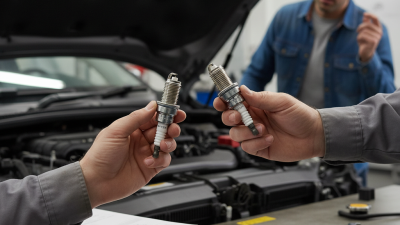
A strong manufacturer should provide stable ignition performance, consistent gap dimensions, and reliable resistance to fouling under demanding conditions. Product samples can reveal details that catalog images hide, such as terminal fit, ceramic finish, and gasket compression. Small details matter.
This overview does not treat factory size as proof of quality. Large output can still hide uneven batch control, while a smaller supplier may offer more responsive engineering support. That is an important limitation. Public information may also change, so buyers should confirm factory capabilities, certification validity, warranty terms, minimum order quantities, and shipping arrangements directly. The goal is not to declare one universal winner. It is to help procurement teams compare evidence, reduce avoidable risk, and select Iridium Spark Plugs that match their engines, operating environments, and long-term service expectations.
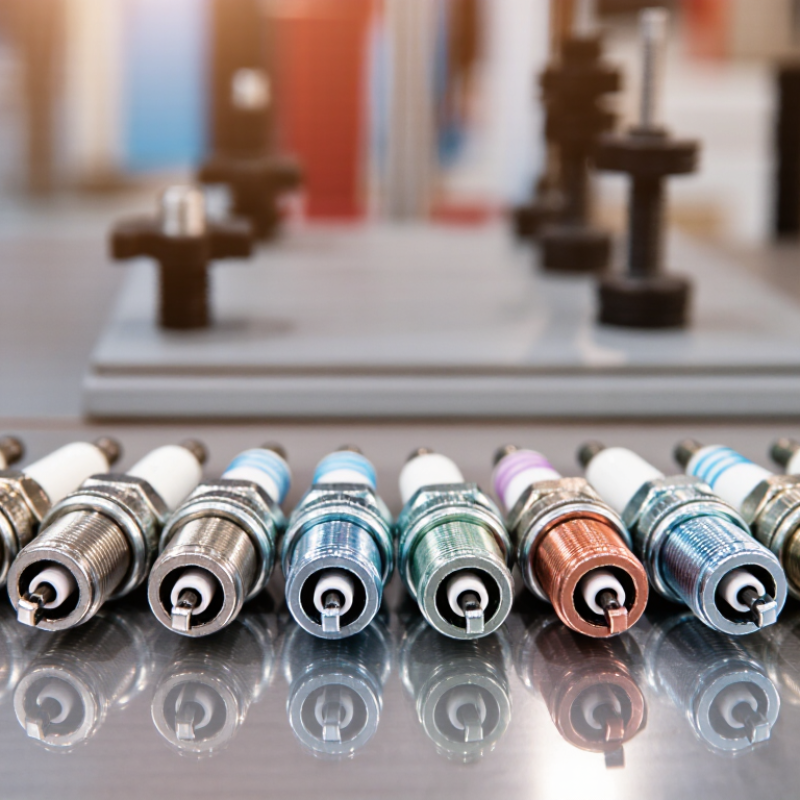
Evaluation starts with measurable manufacturing evidence, not attractive catalogs. The China Association of Automobile Manufacturers reported over 30 million vehicle sales in 2023. This scale demands stable electrode dimensions, controlled ceramic firing, and repeatable heat ranges. Buyers should verify IATF 16949 certification, calibration records, and batch-level traceability. ISO 9001 alone is not enough.
Testing must reflect workshop conditions. Inspectors can measure center-electrode diameter, gap accuracy, shell torque, and resistor value. Endurance testing under repeated hot and cold cycles reveals weak sealing. The International Energy Agency reported that global electric-car sales exceeded 14 million in 2023. Internal-combustion demand may change, but millions of engines still require dependable ignition parts. That makes consistency more valuable than low pricing.
Supplier scoring should also include raw-material certificates, rejection rates, packaging protection, and response time for technical complaints. A capable factory should provide sample reports and explain test limits clearly. A polished sample proves little. Some suppliers perform well during audits but show variation across later batches. That risk deserves attention. Buyers should compare at least three production lots and review independent test results where possible. No factory is perfect. The evaluation process should leave room for failed samples, corrective action, and honest reassessment.
China’s iridium spark plug industry has become an important part of the global automotive supply chain. Its strength comes from large-scale machining, ceramic production, metal forming, and export experience. Manufacturers serve passenger cars, motorcycles, commercial vehicles, and industrial engines.
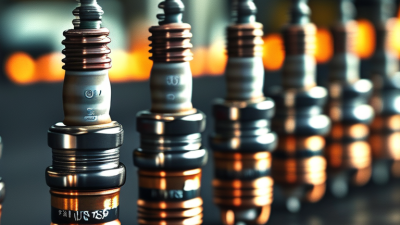
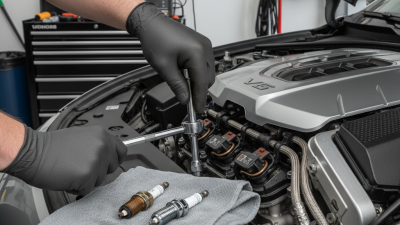
Modern factories typically combine iridium alloy electrodes with precision ceramic insulators and controlled laser welding. These details affect ignition stability, service life, and resistance to fouling. During supplier evaluations, buyers should review material certificates, electrode dimensions, torque requirements, and heat-range testing. Consistent samples matter more than attractive catalogs. Data matters.
China’s global market position is strong, but it is not uniform. Some manufacturers operate advanced testing laboratories and automated inspection lines. Others still depend heavily on manual checks and basic equipment. Quality varies. Export buyers should request batch traceability, temperature-cycle results, leak testing records, and independent performance comparisons. Packaging also deserves attention, especially when plugs travel through humid ports or long warehouse cycles.
The industry continues to improve through tighter process control and rising demand for replacement parts. However, low-price competition can encourage thinner electrodes, inconsistent plating, or unclear compatibility claims. These risks require careful technical review. A reliable manufacturer should explain tolerances clearly, support application matching, and provide repeatable samples before large orders. Market reputation helps, but verified production evidence carries greater weight.
Profiles of ten Chinese iridium spark plug manufacturers are most useful when they compare capabilities, not just factory size. The China Association of Automobile Manufacturers reported 31.28 million vehicles produced in 2024. That figure signals a large automotive supply base, but it includes electric vehicles, which do not use spark plugs. That distinction matters. A buyer should check each supplier’s actual combustion-engine product range, export experience, and quality-control records rather than infer plug demand from vehicle output alone.
A practical profile should note electrode dimensions, heat-range options, resistor design, thread fit, and available inspection data. Iridium’s fine-wire electrode supports reliable ignition, but it does not excuse poor sealing or inconsistent gap control. Ask for dimensional reports, batch traceability, and test results for the intended engine application. Small details matter. Compare sample plugs under the same installation and operating conditions, and verify the specified tightening torque. Some supplier profiles may rely on public catalogs rather than independent factory audits; treat those claims cautiously. The strongest shortlist is not necessarily the one with the lowest quote. It is the one with evidence that each specification can be repeated across production batches.
Global buyers should inspect more than a polished sample. OICA reported 93.5 million motor vehicles produced worldwide in 2023. This scale demands stable ignition performance, not occasional laboratory success. Iridium’s high melting point supports fine electrodes and longer service intervals. However, the USGS Mineral Commodity Summaries 2024 identifies iridium as a platinum-group metal recovered mainly as a by-product. Supply planning therefore deserves careful attention.
Certification evidence should match the actual production site. IATF 16949 supports automotive process control, while ISO 9001 strengthens quality-system traceability. Ask for certificate scope, expiry dates, and recent audit findings. Then review incoming-material records, welding controls, ceramic insulation tests, and 100% electrical inspection. A certificate is not proof of every batch. That distinction is often missed.
Technology claims need measurable evidence. Request spark-gap consistency data, thermal-cycle results, vibration tests, and corrosion exposure records. A capable factory should explain electrode geometry, laser-welding parameters, firing-temperature control, and automated inspection thresholds. Production capacity also needs verification through monthly output, operating shifts, mould availability, and backup equipment. Industry reports from the International Energy Agency recorded nearly 14 million electric-car sales in 2023, increasing pressure on combustion-component suppliers to improve efficiency and flexibility. Capacity figures can look impressive, yet bottlenecks may remain in ceramic forming or final testing. Buyers should verify this with shipment records and a witnessed factory audit.
Global buyers should compare iridium spark plug suppliers through evidence, not attractive catalogs. OICA reported 93.5 million motor vehicles produced worldwide in 2023. Meanwhile, the IEA recorded nearly 14 million electric car sales in 2023. This shift makes application accuracy and long-term demand forecasting more important.
Request traceable material certificates, dimensional inspection reports, and heat-range test results. Check thread size, reach, terminal design, electrode gap, and engine compatibility. A supplier should provide samples before bulk production. Compare minimum order quantities, tooling charges, production lead times, packaging, and Incoterms. Ask whether each batch receives serial-level inspection. In practice, a low unit price can hide expensive returns. I would not approve an order without confirming samples under the buyer’s operating conditions. One overlooked detail remains possible, especially with mixed engine catalogs.
Tips: Build a scorecard with quality, price, delivery, documentation, and after-sales support. Give quality evidence at least 30% of the score. Start with a small trial order. Record misfires, installation fit, electrode wear, and returned quantities. Review supplier performance after 90 days. Industry forecasts can guide demand, but they cannot replace field testing.