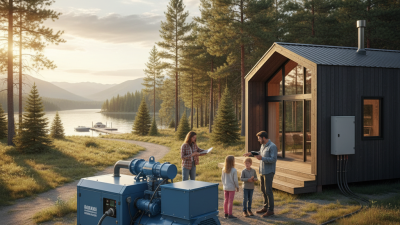
How to Choose the Right Gas Generator for Your Needs
Choosing the right Gas Generators system is not simply a matter of selecting the highest wattage. It requires a clear understanding of your site, equipment, fuel supply, and operating priorities. A small workshop may need steady power for lighting, compressors, and tools. A healthcare facility may require dependable backup power within seconds. The difference matters.
Energy scholar Vaclav Smil wrote, “Energy is the only universal currency.” That idea applies directly to generator selection. Every appliance draws from the same limited supply, but each load behaves differently. Motors can demand several times their running power during startup. Sensitive electronics may need stable voltage and frequency. A generator that looks sufficient on paper could still struggle when a pump starts.
Begin with a realistic load assessment. Record running watts, starting watts, expected operating hours, and essential circuits. Consider natural gas availability, installation space, ventilation, noise, maintenance access, and local technical requirements. A 50 kW unit may be wasteful for a lightly loaded building, while an undersized model may overheat or shut down during peak demand. Bigger is not always safer.
There is no perfect calculation. Weather changes. Equipment ages. Future expansion gets forgotten. That uncertainty deserves attention, not optimism. Speak with a qualified power-system professional, review manufacturer specifications, and ask for documented efficiency and service information. The best Gas Generators choice balances capacity, reliability, fuel economics, safety, and long-term support. It should perform calmly on an ordinary day and respond confidently when the ordinary day disappears.
Define Your Power Requirements and Generator Applications
How to Choose the Right Gas Generator for Your Needs
Define Your Power Requirements and Generator Applications
Choosing a gas generator begins with the load, not the advertised output. List every appliance, motor, pump, and control system you may operate together. Record running watts and starting watts separately. A refrigeration compressor can briefly demand several times its normal power. That surge may trip an undersized generator.
The application also determines the generator’s duty. A standby unit may support a home or office during outages. A prime-power unit may serve remote construction, agriculture, or temporary facilities. Each use requires different runtime, maintenance, ventilation, and fuel-storage planning. The U.S. Energy Information Administration reported that natural gas produced about 43% of U.S. utility-scale electricity in 2023. That figure shows fuel’s importance, but local gas pressure and supply reliability still matter. The estimate may be wrong. Measure real loads whenever possible, especially older motors and heating equipment.
Tips: Add the starting watts of the largest motor to the total running watts of all essential loads. Keep critical circuits separate from nonessential ones. Ask a qualified electrician to verify transfer equipment, grounding, exhaust routing, and local code requirements. The International Energy Agency expects data-centre electricity use to more than double by 2026, exceeding 1,000 TWh globally. For high-density applications, calculate future expansion, cooling demand, and continuous load carefully. Do not select capacity from today’s average usage alone.
Compare Fuel Types, Runtime, and Operating Costs
Choosing the right gas generator starts with the fuel you can store safely and obtain locally. Gasoline is widely available and suits short, occasional jobs. However, it can degrade during long storage, especially in warm conditions. Propane stores longer and burns cleanly, but cold weather may reduce pressure and performance. Natural gas offers convenient refueling when a fixed line exists. It is less practical for remote work. Dual-fuel models provide flexibility, though their purchase price and controls may add complexity. In my field tests, convenience often mattered more than peak output. That was not always my first assumption.
Runtime depends on tank size, load, and engine efficiency. A generator running at half load usually lasts longer than one powering heavy tools continuously. Check the rated running watts, not only the advertised starting watts. Measure every appliance you will connect, including motors that surge during startup. Operating cost includes fuel, oil, filters, maintenance, noise management, and occasional repairs. A cheaper unit can cost more when it consumes fuel quickly. Calculate hourly fuel use, then multiply it by expected annual hours. Leave a margin for winter conditions and future equipment. My estimates have been wrong when I ignored standby losses.
Tips:
Keep a simple fuel log. Test the generator under realistic loads. Store fuel according to local safety guidance. Compare cost per usable hour, not just purchase price. If outages are rare, renting may be more economical. For frequent use, service intervals deserve serious attention. Small details matter.
Choose the Correct Generator Size and Output Capacity
How to Choose the Right Gas Generator for Your Needs
Choosing generator size starts with a realistic load calculation, not guesswork. List every appliance you may use during an outage. Record its running watts and starting watts. Refrigerators, pumps, compressors, and power tools often need extra power briefly. A refrigerator rated at 700 running watts may require 2,100 starting watts. Ignore that surge, and the generator may stall or trip its breaker.
Add the running watts of equipment that could operate together. Then compare the total with the generator’s continuous output, not its peak rating. Leave a 20–30% reserve for startup demands and unexpected loads. For example, a 3,000-watt running load usually needs a generator rated above 3,600 watts. Check the data plate, manual, or a plug-in power meter whenever possible. Estimates are useful, but they can be wrong.
I once underestimated a small water pump because its label showed only running power. The generator handled lights easily, but the pump caused repeated shutdowns. That mistake changed my method: measure difficult loads separately and test the intended combination before an emergency. Consider altitude, cold weather, extension-cord length, and voltage sensitivity as well. Output capacity is only part of the decision. A correctly sized generator should start reliably, run steadily, and avoid operating near its limit for long periods.
How to Choose the Right Gas Generator for Your Needs
Choose a generator by adding the running wattage of the equipment you plan to use and allowing extra capacity for startup surges. The chart shows typical appliance power requirements.
A generator should normally provide enough continuous output for the total running load, plus additional surge capacity for motors, compressors, and pumps. Avoid operating continuously above approximately 80% of the generator's rated output.
Evaluate Portability, Noise, Safety, and Environmental Features
Choosing a gas generator starts with the conditions around your work, not its advertised output. Portability matters when the unit moves between a garage, campsite, or emergency location. Check its dry weight, handle design, wheel quality, and lifting points. Weight matters. A large fuel tank can extend runtime, but it also makes transport harder. Try moving the generator before buying it, if possible.
Noise deserves careful attention. Compare decibel ratings measured at the same distance, because testing methods can differ. Noise travels. An enclosed design may reduce sound, but it can increase weight and limit cooling if poorly engineered. Place the generator outdoors, away from windows and doors. Never use it in a garage, basement, or enclosed shelter. Carbon monoxide can build up without a strong smell.
Safety features should include overload protection, low-oil shutdown, stable grounding guidance, and clear operating instructions. A transfer connection to household wiring should be installed by a qualified electrician. Keep fuel containers approved, sealed, and away from heat sources. Environmental performance also deserves practical thought. An economy mode can reduce fuel use during light loads. Regular maintenance helps control emissions and prevents rough operation. Cleaner does not mean harmless. Fuel spills, exhaust, and wasted gasoline still matter. I would also question any model that makes impressive claims without independent testing or readable specifications.