Leave Your Message
China’s gas-engine supply chain is becoming more important as industries seek reliable, lower-emission power solutions. The International Energy Agency’s Gas 2024 report projects global gas demand to grow by about 2.5% annually from 2024 to 2029. This outlook supports continued demand for industrial gas engines and replacement components, including Gas Engine Spark Plugs. China also offers strong manufacturing capacity, advanced machining, and broad export experience. Yet supplier quality differs widely.
This guide examines China’s top 10 Gas Engine Spark Plugs suppliers through practical purchasing criteria. These include electrode materials, thermal stability, service life, ignition performance, certification, and production traceability. Reports from Grand View Research identify rising demand for efficient spark-ignition systems across power generation, transportation, and industrial equipment. That trend sounds promising. However, market growth does not automatically prove product reliability.
A serious supplier should provide test records, dimensional drawings, compatible engine models, and clear warranty terms. Laboratory claims are useful, but field performance matters more. A plug operating beside a high-temperature gas engine faces vibration, pressure, deposits, and frequent thermal cycling. Small design differences can affect fuel consumption and maintenance intervals. Supplier rankings can also change by application, because a landfill-gas engine needs different resistance from a backup generator.
Therefore, this list should be treated as a researched starting point, not a final purchasing decision. Company reputation, factory audits, sample testing, and after-sales response deserve equal attention. Some public supplier information remains incomplete. That is worth acknowledging. Reliable sourcing requires verification, not attractive catalog language.
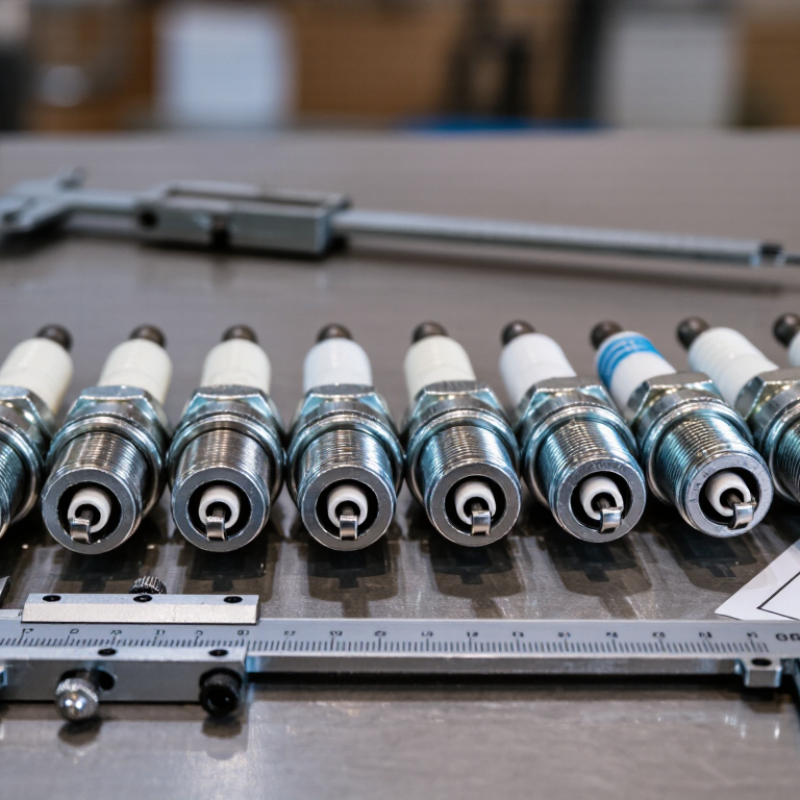
Gas Engine Spark Plug Fundamentals: M18 Threads, 2–4 Electrodes, and Heat Ranges
An M18 thread is common in industrial gas engines, but thread size alone does not confirm compatibility. Technicians must check thread reach, sealing method, shell length, and firing-end clearance. A plug that fits the cylinder head can still place its electrodes incorrectly. That mistake may increase deposits or cause pre-ignition. SAE technical guidance emphasizes accurate dimensional control and correct thermal selection for reliable ignition systems.
Electrode count also requires practical judgment. Two, three, or four electrodes can support longer service intervals, but more electrodes do not automatically create a stronger spark. They can change flame exposure, gap behavior, and deposit resistance. Field inspection remains important. According to the IEA Gas 2024 report, global gas demand is expected to grow by more than 2% annually through 2026. That outlook increases attention on stable engine operation and maintenance efficiency.
Heat range describes how quickly the plug transfers heat from the firing end. A plug that runs too cold may accumulate carbon during low-load operation. One that runs too hot may raise abnormal combustion risk. The correct range depends on engine load, mixture quality, ignition timing, and cooling conditions. A useful workshop practice is recording plug color, gap wear, and operating hours together. It is not perfect. Real engines often challenge catalogue assumptions.
| No. | Technical Parameter | Typical Gas-Engine Specification | Engineering Significance | Recommended Verification |
|---|---|---|---|---|
| 1 | Thread diameter | M18 nominal thread | M18 spark-plug threads are widely used in stationary natural-gas, biogas, and cogeneration engines. The engine manufacturer’s drawing remains the controlling specification. | Confirm the cylinder-head thread from the engine manual or technical drawing. |
| 2 | Thread pitch | Commonly 1.5 mm for M18 applications | The diameter alone does not identify a compatible plug. An incorrect pitch can damage the cylinder-head threads or prevent complete seating. | Check both diameter and pitch with a thread gauge or approved dimensional drawing. |
| 3 | Thread reach | Often approximately 19–32 mm, depending on the cylinder head | Reach must position the firing end correctly in the combustion chamber without protruding excessively or remaining recessed. | Match the specified reach exactly; do not substitute based only on thread diameter. |
| 4 | Electrode configuration | Center electrode with 2–4 ground electrodes is common in industrial designs | Multiple ground electrodes can support service life and stable ignition under lean-burn or high-duty-cycle operation. They do not automatically improve performance in every engine. | Confirm the electrode layout, firing direction, and clearance against the engine maker’s specification. |
| 5 | Electrode gap | Frequently within approximately 0.3–0.8 mm; application-specific | The correct gap depends on ignition-coil energy, combustion pressure, fuel composition, emissions calibration, and the plug design. | Use the prescribed gap; measure with a calibrated wire gauge and avoid bending delicate electrodes unnecessarily. |
| 6 | Heat range | Manufacturer-specific classification; no universal numeric scale | A colder plug transfers heat more rapidly, while a hotter plug retains more heat. Numeric heat-range codes cannot be compared reliably across different manufacturers without a cross-reference. | Select by the engine maker’s part specification, operating load, and combustion temperature—not by number alone. |
| 7 | Insulator material | High-alumina technical ceramic is widely used | The ceramic insulator must withstand high temperature, electrical stress, thermal cycling, and contamination from oil or combustion deposits. | Review insulation-quality data, dielectric testing, and resistance to thermal shock. |
| 8 | Electrode material | Nickel alloys are common; precious-metal tips may be used for extended life | Material selection affects erosion rate, required ignition voltage, fouling resistance, and maintenance intervals. | Request the electrode alloy, tip dimensions, and documented durability test conditions. |
| 9 | Shell and sealing system | Steel shell with plated or corrosion-resistant surface; sealing washer or tapered seat | The seat design must match the cylinder head. Correct sealing prevents combustion-gas leakage and helps transfer heat from the plug shell. | Confirm seat type, shell dimensions, corrosion protection, and compatibility with the specified installation torque. |
| 10 | Electrical resistance and ignition demand | Resistor or non-resistor construction varies by ignition system; required voltage depends on pressure and gap | A resistor plug can reduce radio-frequency interference, but the resistance must be compatible with the ignition coil, leads, and engine control system. | Measure resistance with a calibrated multimeter and validate ignition performance under operating pressure. |
Note: The values shown are industry reference ranges rather than a supplier ranking. Final compatibility must be confirmed using the specific gas-engine manufacturer’s service documentation, approved plug drawing, and operating conditions.