China Best Cogeneration Plants for Global Buyers
China Best Cogeneration Plants for Global Buyers
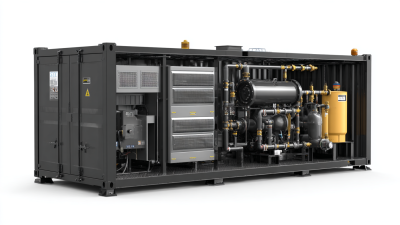
China has become a significant manufacturing base for Cogeneration Plants serving factories, hospitals, hotels, campuses, and district heating networks. Its strongest suppliers combine gas engines, steam turbines, heat recovery systems, control panels, and auxiliary equipment within one coordinated design. A buyer may see stainless-steel heat exchangers, insulated steam pipes, and digital monitoring screens working together on the plant floor.
Dr. Steve Nadel, an energy-efficiency specialist, has emphasized that “combined heat and power can provide substantial energy savings while improving reliability.” This principle remains practical for international buyers. A well-designed plant can use natural gas, biogas, or other approved fuels to produce electricity and useful heat simultaneously. That reduces wasted energy and may lower operating costs.
The best Chinese suppliers do more than quote equipment prices. They study local fuel quality, ambient temperature, load profiles, grid conditions, emissions requirements, and maintenance capacity. They also provide factory testing, installation guidance, spare parts, operator training, and remote technical support. These details often decide whether a project performs smoothly after commissioning.
Still, “best” is not universal. A system optimized for a textile mill may fail to suit a hospital or food-processing site. I have seen specifications look impressive while ignoring seasonal heat demand. That is a weakness worth admitting. Global buyers should compare measured efficiency, warranty terms, service response, certification, and proven reference projects before signing. Careful evaluation creates a Cogeneration Plants solution that is efficient, dependable, and suitable for real operating conditions.
Cogeneration Basics: Why CHP Plants Achieve 60–80% Total Efficiency
China Best Cogeneration Plants for Global Buyers
Cogeneration, or combined heat and power, produces electricity and useful heat from one fuel stream. Conventional power generation often rejects heat through cooling systems. CHP captures that heat for steam, hot water, drying, or district heating. According to the U.S. Department of Energy’s CHP Technology Fact Sheet, typical total efficiency reaches 65–75%. Well-designed systems can approach 80%.
The real gain depends on steady heat demand. A food factory may use recovered steam for sterilization. A textile plant may need hot water continuously. The U.S. Environmental Protection Agency reports that CHP can reduce fuel use and emissions compared with separate heat and power production. However, 80% is not automatic. Poor load matching, seasonal demand, and long piping can reduce performance. This part deserves more attention.
Tips: Ask suppliers for measured electrical efficiency, thermal efficiency, and total efficiency separately. Request twelve months of operating data from comparable installations. Check fuel quality, maintenance intervals, grid requirements, and local emissions rules. A plant with impressive laboratory figures may perform differently in a dusty industrial setting. That is an uncomfortable possibility, but buyers should test it through independent verification. Better design often matters more than a larger engine.
China Best Cogeneration Plants for Global Buyers - Cogeneration Basics: Why CHP Plants Achieve 60–80% Total Efficiency
| CHP Technology |
Typical Electrical Efficiency |
Typical Useful Heat Efficiency |
Total CHP Efficiency |
Common Capacity Range |
Suitable Applications |
Primary Fuel Options |
| Reciprocating Gas Engine |
35–45% |
40–50% |
75–90% |
50 kW–10 MW per unit |
Hotels, hospitals, factories, district energy, commercial buildings |
Natural gas, biogas, landfill gas, wastewater gas |
| Gas Turbine CHP |
25–40% |
40–55% |
65–85% |
1–50 MW per unit |
Large industrial sites, refineries, chemical plants, district heating |
Natural gas, associated gas, low-calorific process gas |
| Steam Turbine CHP |
15–35% |
45–60% |
60–85% |
1–300 MW per unit |
Paper mills, sugar mills, biomass plants, process industries |
Biomass, coal, natural gas, municipal solid waste, process steam |
| Combined-Cycle CHP |
40–60% |
20–35% |
65–85% |
10–500 MW per plant |
Large industrial complexes, utility-scale district energy, campuses |
Natural gas, process gas, supplementary firing fuels |
| Fuel Cell CHP |
40–60% |
20–40% |
60–85% |
5 kW–10 MW per module or installation |
Hospitals, data centers, microgrids, commercial buildings |
Hydrogen, natural gas, biogas, methanol-derived fuel |
Performance note: Total CHP efficiency is calculated as useful electrical output plus useful recovered heat divided by fuel energy input. Actual performance depends on load factor, return-water temperature, heat recovery design, fuel quality, ambient conditions, and operating schedule. The ranges shown are representative engineering values rather than guaranteed project results.
China’s Coal-Fired CHP Plants: Heat Rates Below 7,000 kJ/kWh
China’s Coal-Fired CHP Plants: Heat Rates Below 7,000 kJ/kWh
For global buyers, a heat rate below 7,000 kJ/kWh signals strong electrical efficiency in selected coal-fired CHP units. It means the plant needs less fuel to produce one kilowatt-hour. That matters. Modern boilers, optimized turbines, and improved steam conditions can support this result under suitable operating conditions.
CHP performance also depends on useful heat delivery. A plant supplying steam to factories may show a different heat rate after thermal energy is credited. Buyers should request the calculation method, reference load, coal quality, and ambient conditions. Independent acceptance tests should record fuel flow, steam pressure, exhaust temperature, and net power output. A clean test sheet is more valuable than a confident sales claim.
Field operation is less perfect. Seasonal heat demand can change turbine loading, while wet coal may reduce combustion stability. Auxiliary equipment also consumes electricity. I would not treat 7,000 kJ/kWh as a universal guarantee. It is a target that requires evidence. A practical review should compare design values with twelve-month operating data, maintenance records, and emissions measurements. Small gaps often reveal large costs. A buyer may also inspect ash handling, water treatment, control response, and operator training before approving the project.
China’s Coal-Fired CHP Plants: Heat Rates Below 7,000 kJ/kWh
Representative coal-fired combined heat and power performance benchmarks
The benchmark heat rates are shown on a lower-is-better basis. Electrical efficiency is calculated using
3,600 kJ/kWh ÷ heat rate; therefore, a heat rate below 7,000 kJ/kWh corresponds to an
equivalent efficiency above approximately 51.4%. Actual CHP performance varies with fuel quality, load,
steam extraction, and the accounting method used for useful heat.
Gas and Biomass CHP Options: Electrical Efficiency of 35–45%
China Best Cogeneration Plants for Global Buyers
Gas and biomass combined heat and power systems can deliver electrical efficiencies of 35–45% when properly designed. This range matters to buyers comparing fuel costs, grid reliability, and on-site generation. Gas engines often reach the upper end under stable loads and controlled operating conditions. Biomass systems may perform differently because fuel moisture, particle size, and ash content vary.
Real projects require more than a catalog figure. A 2 MW gas unit may lose efficiency when operated below its preferred load for long periods. Biomass equipment needs steady fuel preparation, safe storage, and careful combustion control. Wet wood chips can increase consumption and reduce output. Small details matter.
Site data should guide procurement. Buyers should request tested electrical output, fuel assumptions, ambient conditions, and maintenance records. Independent performance verification adds credibility. Local technicians also need practical training for sensors, filters, lubrication, and emissions monitoring. That part is sometimes underestimated.
Combined heat recovery can raise total energy utilization above electrical efficiency alone. Recovered heat may support hot water, drying, district heating, or industrial processes. However, unused heat is wasted value. A plant serving a stable thermal load usually performs better economically than one exporting electricity only. Some plans look efficient on paper. Field conditions can be less forgiving.
Global Buyer Checks: ISO 9001, IEC Compliance, and 20–30% CO₂ Savings
China Best Cogeneration Plants for Global Buyers
Global Buyer Checks: ISO 9001, IEC Compliance, and 20–30% CO₂ Savings
When assessing cogeneration plants in China, global buyers should inspect evidence, not polished brochures. ISO 9001 certification indicates a controlled quality system, but its scope matters. Ask for the current certificate, audit status, and documented corrective actions. A certificate alone does not prove reliable plant performance.
IEC compliance also requires careful checking. Confirm which standards cover electrical panels, generators, protection systems, and control equipment. Request type-test reports, wiring diagrams, calibration records, and factory acceptance test results. During a witnessed test, buyers can examine alarm responses, emergency shutdowns, load changes, and cabinet labeling. Small details matter.
Real operating data matters more.
Claims of 20–30% CO₂ savings should include a clear baseline. The calculation should compare fuel use, electricity output, useful heat, operating hours, and local grid emissions. Savings may reach this range when heat recovery remains high and the plant runs steadily. They can fall sharply during partial-load operation or poor thermal demand. One practical warning: projected efficiency often looks better than field performance. Buyers should request twelve months of comparable records, though such data may be unavailable for a new installation. In that case, require a transparent model, independent verification, and performance guarantees tied to measurable conditions. Experienced teams should also inspect maintenance access, spare-part plans, operator training, and combustion-emission monitoring before signing technical documents.