Leave Your Message

What Are the 2026 Top Gas Generators for Global Buyers?

What Are the 2026 Top Gas Generators for Global Buyers? This question requires more than comparing advertised power ratings. Gas Generators must perform reliably across construction sites, farms, workshops, hospitals, and remote facilities. A unit that works well in a mild climate may struggle in high heat, dusty conditions, or elevated locations. Context matters.

This guide examines the practical factors shaping reliable generator choices in 2026. These include rated output, fuel efficiency, voltage flexibility, noise levels, maintenance access, emissions performance, and long-term operating costs. It also considers local fuel availability, grid stability, warranty coverage, spare parts, and qualified service support. Those details can determine whether a generator remains useful after several years. Buyers should also verify regional certification requirements and installation rules before placing an order. Manufacturer specifications provide a starting point, but field experience often reveals important differences. Starting performance, automatic controls, vibration, and cold-weather operation deserve careful attention. No ranking is perfect. A top-rated model may still be unsuitable for a buyer’s workload or environment. This overview therefore compares suitability rather than chasing a single universal winner. It aims to help global purchasers ask better questions, assess supplier claims, and select equipment with dependable performance, transparent documentation, and realistic ownership expectations. That sounds simple. In practice, it requires patience, technical review, and a willingness to reconsider attractive specifications.
What Are the 2026 Top Gas Generators for Global Buyers?

What Defines a Top Gas Generator in 2026?

What Defines a Top Gas Generator in 2026?

A top gas generator is not simply the largest or most powerful machine. Global buyers should examine fuel efficiency, stable voltage, low emissions, and fast load response. A quality unit should start reliably after long idle periods and maintain output during sudden demand changes. Imagine a cold morning, a factory conveyor restarting, and lights flickering for only a moment. The generator should handle that event without creating operational stress.

Experience shows that control systems matter as much as engine size. Look for clear monitoring, remote diagnostics, overload protection, and recorded maintenance alerts. Confirm compatibility with the available gas quality, pressure, and local grid conditions. Independent test reports, recognized safety certifications, transparent warranty terms, and accessible service support strengthen reliability. A cheaper unit may appear efficient, but difficult parts access can increase lifetime costs. That point is often underestimated.

Tips: Ask for measured fuel consumption at different load levels, not only the best-case figure. Review noise data from realistic distances. Check starting performance, maintenance intervals, and technician training. No specification is perfect. Buyers should compare test conditions carefully, because laboratory results may not match dusty sites, weak gas pressure, or frequent load changes. A practical decision combines verified data with the generator’s actual working environment.
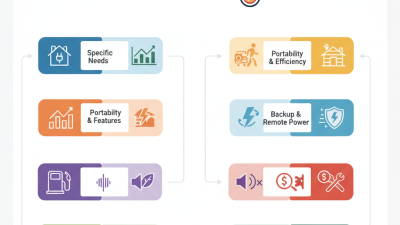
What Are the 2026 Top Gas Generators for Global Buyers? - What Defines a Top Gas Generator in 2026?

A practical comparison framework based on efficiency, emissions, reliability, fuel flexibility, operating cost, and international deployment requirements.

Evaluation Dimension Reference Benchmark for a Top 2026 Unit Why It Matters to Global Buyers
Electrical output range Approximately 20 kW to multi-megawatt configurations, with modular paralleling for larger sites Supports applications ranging from small commercial facilities to hospitals, data centers, utilities, and industrial plants.
Electrical efficiency About 35%–45% at or near rated load for modern spark-ignited gas engine systems Higher efficiency lowers fuel consumption, operating cost, and carbon emissions per kilowatt-hour generated.
Combined heat and power capability Total useful efficiency can reach approximately 80%–90% when heat is recovered effectively Recovered hot water or steam can improve project economics in district energy, food processing, manufacturing, and commercial facilities.
Natural-gas consumption Typically around 0.22–0.30 m³ of natural gas per kWh of electricity at efficient operating load, depending on gas quality and engine design Provides a practical basis for estimating fuel costs, pipeline capacity, storage requirements, and payback period.
Fuel flexibility Compatibility options may include pipeline natural gas, biogas, landfill gas, or treated renewable gas, subject to methane content and contaminants Flexible fuel capability can reduce supply risk and support renewable-gas or waste-to-energy strategies.
Emissions performance Low-NOx combustion, oxidation catalysts, and closed-loop controls designed to meet the applicable local air-quality standard Emission limits differ by country, application, fuel, and operating mode, so compliance must be verified for the installation location.
Load-following and grid response Automatic voltage and frequency regulation, rapid load acceptance, and synchronizing controls for parallel operation Important for backup power, microgrids, peak shaving, demand response, and sites with variable electrical loads.
Reliability and availability Designed for continuous or standby duty with redundant auxiliaries, condition monitoring, and planned maintenance intervals specified by the manufacturer Availability directly affects production continuity, critical-load protection, and the total cost of unplanned downtime.
Noise and installation footprint Acoustic enclosure, vibration isolation, ventilation design, and site-specific noise compliance; final sound levels depend on distance and installation Helps meet urban planning, worker-safety, residential-area, and facility noise requirements.
Digital monitoring and control Remote diagnostics, event logging, predictive-maintenance data, cybersecurity controls, and integration with SCADA or building-management systems Improves fleet visibility, maintenance planning, response time, and operational control across international sites.
Standards and certification Documentation aligned with applicable electrical, safety, emissions, pressure-equipment, and grid-interconnection requirements Verified compliance reduces approval delays and supports smoother deployment in different jurisdictions.
Lifecycle value Evaluation based on capital cost plus fuel, maintenance, overhaul, emissions-control, grid, and decommissioning costs The lowest purchase price does not necessarily provide the lowest total cost of ownership over the project life.
Data note: The figures shown are general industry reference ranges for modern gas-engine generator systems. Actual performance varies with generator size, electrical load, ambient conditions, gas composition, altitude, emissions settings, maintenance condition, and local regulations.

How Gas Generators Are Classified by Power and Fuel Type

For global buyers, “top” gas generators start with correct classification, not a colorful catalog. Power ratings usually appear in kW or kVA. kW describes usable real power. kVA includes apparent power and electrical load effects. A 500 kVA set may deliver about 400 kW at a 0.8 power factor. That difference matters for pumps, compressors, and motor starting.

Generator Duty Classes

Generators are also grouped as standby, prime, or continuous-duty units. Standby models support outages. Prime units run variable loads for longer periods. Continuous-duty equipment carries stable loads for extended operation.

Key Rating Consideration

A 500 kVA set may deliver about 400 kW at a 0.8 power factor. That difference matters for pumps, compressors, and motor starting.

Fuel type changes operating risk and installation needs. Natural gas usually suits sites with dependable pipeline pressure. LPG can serve remote locations, but tank storage needs careful planning. Biogas may reduce waste, yet its methane content can vary widely. That variation affects output, combustion stability, and service intervals.

I recommend testing the fuel before final sizing. A specification sheet cannot reveal every field problem. Humidity, altitude, and cold starts can reduce available power.

Ask for derating charts, fuel-pressure limits, emissions data, and documented test results.

Real projects need more than peak capacity. Measure the daily load curve. Check whether large motors start together. Then compare generator classes against local grid codes and maintenance access.

One imperfect assumption can create expensive oversizing. Under-sizing is worse. A cautious buyer leaves room for future loads, but not unlimited room. That balance often separates a technically sound purchase from an attractive mistake.

Which Performance Features Matter to Global Buyers?

Global buyers in 2026 will judge gas generators beyond nameplate kilowatts. The IEA’s Electricity 2024 report forecasts global electricity demand to rise 3.4% annually through 2026. That pressure makes fast, stable backup power valuable. Buyers should check prime and standby ratings separately. They should also verify voltage, frequency, and load-step response. A clean start is not enough. The set must recover quickly when motors, pumps, or compressors connect.

Fuel efficiency matters during long outages. Compare electrical efficiency at 25%, 50%, and 75% load, not only at full load. Lower fuel use reduces operating cost and storage pressure. Emissions performance also deserves documented testing. Local limits vary, so generic claims are weak evidence. The ISO 8528-5 framework helps buyers examine governing, voltage, and frequency behavior under changing loads. Ask for test records, derating curves, and site-temperature data. High altitude can quietly reduce available output. So can dusty air and extreme heat.

Reliability is a system feature. The 2024 Uptime Institute Global Data Center Survey reported that 54% of respondents experienced an outage during the previous three years. That finding is not a direct generator score, but it shows why transfer systems, controls, batteries, and maintenance deserve equal scrutiny. Remote alarms, black-start capability, enclosure protection, and accessible service points improve real-world performance. I would question any promise based on one laboratory test. Field conditions are messier. A slightly oversized unit may waste fuel, while an undersized unit may fail during starting surges. The best specification leaves room for evidence, not optimism.

What Are the 2026 Top Gas Generators for Global Buyers?

Fuel consumption is a practical comparison point when evaluating natural-gas generator classes for commercial, industrial, and backup applications. The figures below represent approximate consumption at rated electrical output and are calculated using a lower heating value of 9.7 kWh/m³ and approximately 35% electrical efficiency.

Electrical Efficiency

Higher efficiency reduces gas costs and operating emissions over the generator’s service life.

Power Quality

Buyers commonly check voltage regulation, frequency stability, and low total harmonic distortion for sensitive loads.

Grid Compatibility

Automatic transfer capability, multi-voltage support, and 50/60 Hz operation are important for global deployment.

Emissions and Service

Local emissions rules, maintenance access, remote monitoring, and spare-parts availability should be verified before purchase.

How Gas Generator Options Differ Across Global Markets

For global buyers, the top gas generator in 2026 will not be one universal machine. Market conditions decide the better fit. The IEA’s Gas 2024 report projects global gas demand growth of 2.5% in 2024 and 2.3% in 2025. North American projects often favor pipeline-connected units with fast starts. European buyers may prioritize lower emissions, flexible operation, and stricter permitting. Southeast Asian and African sites may need dual-fuel capability when pipelines remain incomplete. Small detail. Big consequence.

The IEA Electricity 2024 report expects renewables to provide more than 90% of global electricity demand growth through 2026. Gas generators may therefore serve balancing, backup, or peak-load roles rather than constant baseload service.

High-speed sets suit short interruptions and modular expansion. Medium-speed units can support larger, steadier loads. Performance still changes with altitude, humidity, temperature, and methane quality.

A sea-level rating may disappoint on a hot mountain site. Published efficiency figures can flatter reality. I would verify them under actual site conditions.

Tips: Compare heat rates using the same load profile. Check local NOx and methane rules before ordering. Test the actual gas. Confirm service access, spare parts, and black-start needs. Add capacity margin, but avoid buying excessive standby power. The best choice is often less powerful, more flexible, and easier to maintain.

What Buyers Should Check Before Importing a Gas Generator

What Are the 2026 Top Gas Generators for Global Buyers?

Before importing a gas generator, confirm the application, fuel, and local grid conditions. The IEA’s Electricity 2025 report recorded 4.3% global electricity demand growth in 2024. That pressure encourages faster purchases, but speed can hide costly mismatches. A unit rated for standby use may fail under continuous industrial loads. Check prime power, altitude derating, ambient temperature, frequency, voltage, and expected running hours. Small details matter.

Fuel quality deserves careful attention. Pipeline gas, biogas, and liquefied petroleum gas require different systems, controls, and safety settings. Ask for tested fuel-composition limits, methane number requirements, pressure ranges, and consumption curves. The IPCC 2006 Guidelines use 56.1 kilograms of CO2 per gigajoule as a reference factor for natural-gas combustion. Actual emissions can differ. Methane leakage and incomplete combustion also need review. Do not trust one laboratory sheet.

Import documents should match the machine’s real configuration. Request load-bank test records, protection settings, wiring diagrams, manuals, spare-parts lists, and service intervals. Check compliance with applicable electrical, noise, pressure, and emissions rules before shipment. ISO 8528 performance classifications can help compare generator sets, but they do not replace local approval. Field experience shows that buyers often overlook radiator performance in hot climates. I still question my own assumptions here; a cooler factory test cannot represent every destination. Verify after-sales training, remote diagnostics, warranty coverage, and port handling requirements before paying the balance.