Why Is the Spark Plug Ground Important?
The Spark Plug Ground is the return path that lets ignition current complete its circuit. When the coil sends high voltage to the center electrode, a spark jumps across the plug’s gap to the ground electrode. Current then travels through the plug body and cylinder head. It is a small path with a demanding job.
A clean, correctly seated plug helps maintain reliable contact with the engine. Corrosion, damaged threads, an incorrect plug, or poor installation can interfere with the connection. The result may include hard starting, rough running, or misfires, though those symptoms have many possible causes. Small details matter.
The phrase “ground” can be misleading. It does not mean the plug should be connected to any convenient metal surface; its designed contact is with the cylinder head. And a visible spark outside the engine does not prove the system works properly under compression. That distinction is easy to miss.
When diagnosing ignition trouble, inspect the plug, coil boot, wiring, and engine grounds rather than blaming one part immediately. Follow the vehicle maker’s plug specification and torque guidance. This is especially important with aluminum cylinder heads, where damaged threads can become an expensive problem. A careful check is useful, but it is not a complete diagnosis. Reliable conclusions come from testing the whole ignition system.
What the Spark Plug Ground Is and Where It Connects
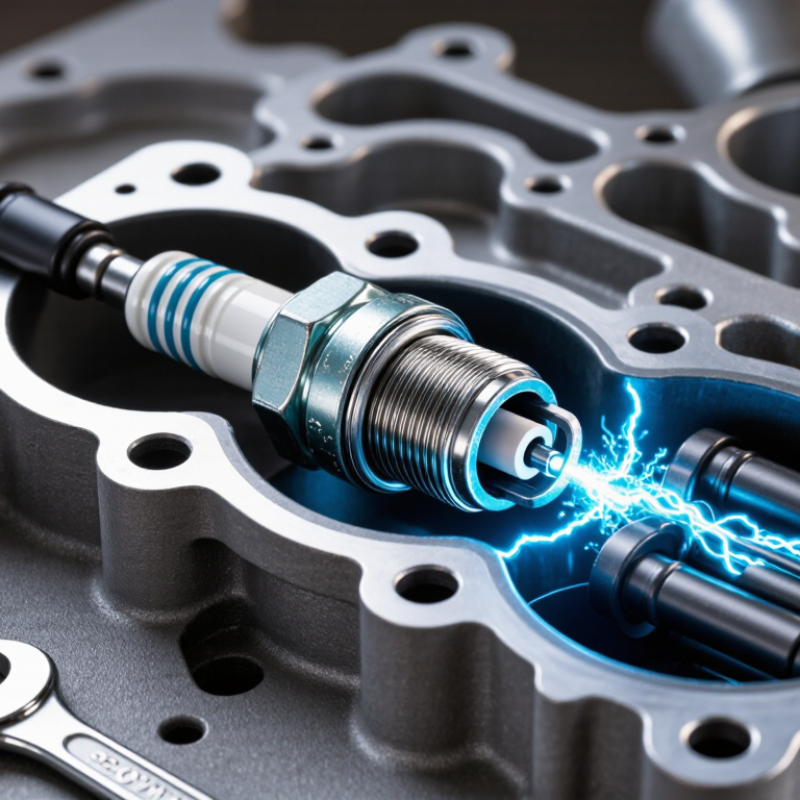
The spark plug ground is the metal path that completes the ignition circuit. The ground electrode is welded to the plug’s threaded metal shell. When the plug is tightened into the cylinder head, the shell makes electrical contact with the head. The return path then runs through the engine block and ground cables to the ignition system. A clean, secure connection matters: corrosion, loose threads, or damaged ground straps can raise resistance and contribute to a weak or inconsistent spark.
SAE ignition-system engineering literature describes spark demand in the tens of thousands of volts; a commonly cited operating range is roughly 10,000–40,000 volts, depending on cylinder pressure, mixture, and electrode gap. That high voltage jumps the gap from the center electrode to the ground electrode, then returns through the engine. The exact voltage is not fixed, and a number alone cannot diagnose a fault. I have seen people blame the plug when the real issue is a poor engine-to-body ground.
Tips: With the engine off and cool, inspect the plug shell, cylinder-head seating area, and ground straps for looseness or corrosion. Follow the vehicle’s service specification for tightening torque and plug gap; finger-tight is not a reliable measurement. A multimeter can help check continuity, but it does not always reveal a connection that fails under load.
How the Ground Completes the Ignition Circuit
A spark plug needs a complete electrical path to create a spark. High voltage travels from the ignition coil to the plug’s center electrode, then jumps the narrow gap to the ground electrode. The plug’s metal shell and threaded seat provide a conductive connection to the cylinder head. From there, the engine ground path carries the current back through the ignition system. The gap is tiny. But the circuit depends on every connection along that route.
A clean, firmly seated plug usually makes reliable contact with the cylinder head. Rust, oil, damaged threads, or a loose connection can add resistance or interrupt the path. That may lead to a weak or inconsistent spark, rough running, or difficulty starting. The ground electrode also shapes the spark gap, so wear or damage can affect ignition even when the plug still looks usable. It is easy to blame the coil alone; sometimes the less obvious contact point is the problem. Grounding arrangements vary by engine, so a service manual is a better guide than assuming every plug grounds identically. Avoid touching ignition components while the engine is running: the voltage can be hazardous.
Why Is the Spark Plug Ground Important? — How the Ground Completes the Ignition Circuit
| Dimension |
What It Does |
Why It Matters |
| Ground electrode |
Provides the opposite side of the spark gap from the center electrode. |
The voltage across the gap can ionize the compressed air-fuel mixture and create a spark. |
| Ignition circuit path |
High voltage reaches the center electrode, crosses the gap, and passes through the ground electrode and plug shell toward the engine’s return path. |
A complete secondary circuit allows the ignition system to deliver energy to the spark gap. |
| Plug shell and cylinder head contact |
The threaded metal shell normally makes electrical contact with the cylinder head when the plug is correctly installed. |
Poor contact from looseness, corrosion, or damaged threads can interfere with the intended return path. |
| Spark-gap condition |
The gap separates the center and ground electrodes; its specified size varies by engine and plug application. |
An excessively wide or worn gap generally requires more voltage to produce a spark and may contribute to misfiring. |
| Ground-electrode wear or damage |
Erosion, overheating, or physical damage can change the electrode shape and gap. |
An altered gap or damaged electrode can make spark formation less reliable and affect combustion. |
| Possible symptoms of an ignition fault |
A weak or intermittent spark may be associated with rough running, hesitation, or a misfire. |
These symptoms can have many causes; the plug, ignition components, wiring, and engine condition should be checked before identifying the ground as the fault. |
| Safe inspection |
Inspect plugs with the engine off and cool, and use the application’s service specifications for gap and installation torque. |
Ignition systems generate high voltage; avoid handling ignition components while the engine is running. |
Why a Reliable Ground Matters for Spark and Engine Performance
A spark plug’s ground electrode completes the circuit: current crosses the gap and returns through the plug shell, cylinder head, and engine ground. That path needs clean metal contact. A thin film of oil, corrosion, or a loose connection can raise resistance and make the spark less reliable, especially under cylinder pressure. The symptom may feel small at first: a brief stumble when accelerating, rough idle, or a misfire that appears only when the engine is hot. A common diagnostic trap is replacing the plug before checking its seat and the engine’s ground connections.
Reliable grounding also matters beyond smooth running. A weak or inconsistent spark can leave fuel partly unburned, increasing emissions and stressing the exhaust after-treatment system. The U.S. Environmental Protection Agency’s OBD requirements use misfire monitoring tied to emissions thresholds, including 1.5 times the applicable FTP standard (40 CFR §86.1806-05). That figure is an emissions-monitoring threshold, not a universal plug-failure rate. During inspection, check for damaged threads, deposits on the plug seat, and corrosion where engine grounds attach. Use the specified tightening procedure; excessive force can damage the seat, while too little can compromise contact. And a clean-looking plug is not proof of a sound ground. The overlooked detail is often the metal beneath it.
Why Is the Spark Plug Ground Important?
A spark plug’s metal shell and the engine cylinder head provide the return path for the ignition circuit. A clean, secure connection helps maintain that path. This chart illustrates Ohm’s law: at a constant 1 amp test current, each milliohm of resistance produces 1 millivolt of voltage drop. These are calculated examples, not measured spark-plug performance data.
Common Symptoms of a Poor Spark Plug Ground
Why Is the Spark Plug Ground Important?
Common Symptoms of a Poor Spark Plug Ground
A weak spark plug ground can make an engine stumble, especially during starting or acceleration. You may notice rough idling, hesitation, hard starting, or intermittent misfires. Sometimes the engine starts normally, then runs unevenly after warming up. Small clues matter.
Look for corrosion, a loose connection, or damaged metal where the plug, cylinder head, and engine ground path meet. A poor connection can interrupt the spark’s return path. The result may feel like a faulty plug, even when the plug itself looks clean. That clue can mislead. A scan tool helps narrow things down, but it cannot confirm a bad ground by itself.
SAE J2012 defines P0300 as a random or multiple-cylinder misfire code; P0301 identifies a cylinder-one misfire. These codes point to misfires, not their cause. The U.S. EPA’s OBD requirements, 40 CFR §86.1806-17, require monitoring misfires that could damage the catalytic converter. Check the ground connection and wiring, then test voltage drop under load. A visual inspection alone can miss resistance. Diagnosis is not always tidy.
How to Inspect and Maintain the Ground Connection
Why Is the Spark Plug Ground Important?
A spark plug’s ground electrode completes the path that lets the spark jump across the gap. The plug also depends on clean metal contact with the cylinder head. Poor contact can cause weak or inconsistent ignition, rough running, or hard starting. Small details matter.
Inspect the engine only when it is cool, and disable the ignition system before removing a plug. Check the ground strap for heavy deposits, burning, cracks, or an uneven edge. A thin, even wear pattern is normal; a melted or badly eroded strap is not. Use a proper gap gauge and compare the measurement with the engine’s service specifications. Don’t force the strap into position. It is easy to mistake a worn plug for an electrical fault.
Before reinstalling, look for dirt or corrosion where the plug seats against the cylinder head. Keep the threads clean, start the plug by hand, and tighten it to the specified torque. Also inspect accessible engine ground cables for loose fasteners, frayed strands, or white-green corrosion. Clean and secure connections only as the service manual directs. No guesswork. I sometimes focus too much on the plug itself; the cable and its mounting point deserve the same careful look.