How to Choose the Best Industrial Gas Generator for Your Needs?
Choosing the right industrial gas generator is crucial for any business relying on stable power. An industrial gas generator must meet specific requirements to ensure efficiency and reliability. This equipment comes in various sizes and specifications, making decision-making challenging.
Selecting an industrial gas generator involves understanding your power needs. Factors like load requirements, runtime, and location also play a significant role. Think about the natural gas supply and installation costs. Each of these variables affects overall performance and efficiency. You may face uncertainties when assessing energy demands and environmental considerations.
A well-chosen industrial gas generator can enhance productivity. However, incorrect choices can lead to frustrations and increased operational costs. It’s essential to research reputable manufacturers and consult experts. Ultimately, your choice should blend your specific needs with expert recommendations for optimal performance.
Understanding the Types of Industrial Gas Generators Available
When choosing an industrial gas generator, understanding the types available is crucial. There are generally two main categories: reciprocating engines and gas turbines. Reciprocating engines are often favored for their efficiency and lower initial costs. They can provide quick power and adaptive response to load changes, making them suitable for many applications. According to a recent industry report, they account for approximately 60% of the global market share in gas generators.
Gas turbines, in contrast, are more effective for large-scale power generation. They excel in continuous operation and have lower emissions. However, the upfront investment is higher, and they may require more complex maintenance. The choice between these types ultimately hinges on specific power needs and operational conditions. Some industries may prioritize efficiency, while others may focus on reliability and longevity.
**Tip:** Assess your energy requirements carefully. Understand the load demands and frequency of usage. This will help narrow down your options significantly.
Additionally, consider factors like location and climate. These can impact performance. Temperatures can affect the efficiency of gas turbines, while reciprocating engines may perform better in varied environments. Balancing these elements is essential for optimal generator performance.
**Tip:** Consult industry experts or reports. They can provide insights that align with real-world requirements. Their experience may save you from costly mistakes.
Comparison of Different Types of Industrial Gas Generators
This chart compares the power output and typical uses of various types of industrial gas generators, providing insights into their suitability for different applications.
Key Factors to Consider When Choosing a Gas Generator
Choosing an industrial gas generator involves careful consideration of various factors. First, you should assess the power requirements of your operations. According to the International Energy Agency, the demand for industrial power solutions is expected to grow by 2.5% annually. Understanding your wattage needs ensures efficiency and reliability.
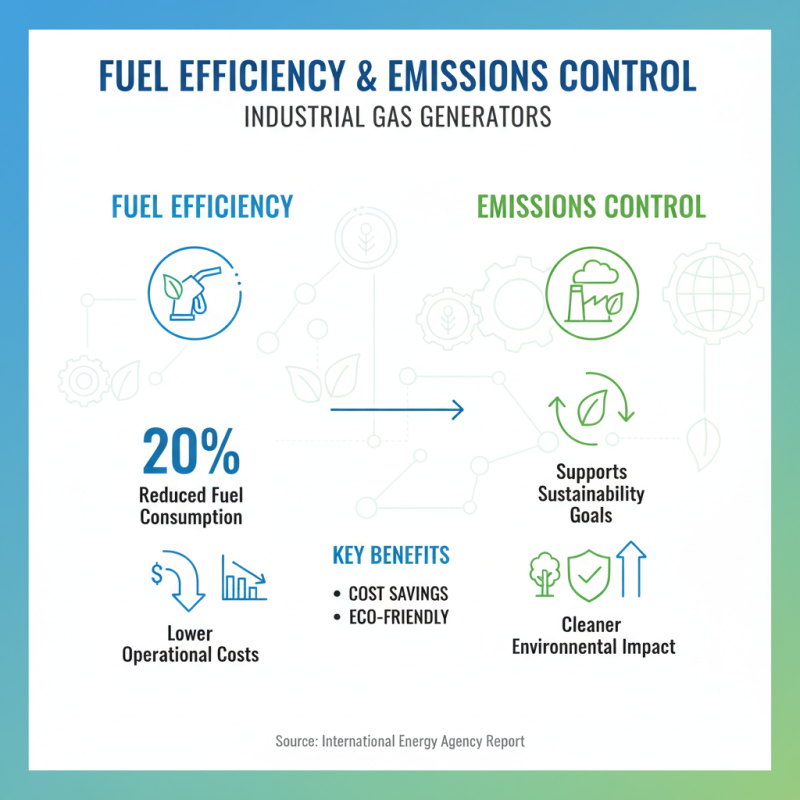
Fuel type is another key consideration. Natural gas is prevalent due to its lower emissions. However, propane or biogas might be suitable in specific contexts. Despite the benefits, check local availability and cost. Reports indicate that 20% of industrial operators change their fuel source due to fluctuating prices. This trend emphasizes the need for flexibility in fuel choice.
Maintenance capabilities should not be overlooked. Research shows that generators requiring specialized skills can lead to downtime. A generator with accessible parts can save time and costs. Regular maintenance can extend the life of a unit, even if operators sometimes neglect this aspect. Many users report that their initial decisions lack foresight regarding long-term upkeep needs.
How to Choose the Best Industrial Gas Generator for Your Needs?
| Key Factor |
Description |
Considerations |
| Power Output |
The generator's ability to provide sufficient power for your needs. |
Determine your peak and continuous power requirements. |
| Fuel Type |
Type of gas (natural gas, propane) the generator uses. |
Availability and cost of the chosen fuel type in your area. |
| Noise Level |
The amount of sound generated during operation. |
Check local regulations on noise levels and choose quieter models if necessary. |
| Run Time |
Duration the generator can run before needing a refill. |
Evaluate how often refueling would be an issue for your operations. |
| Portability |
Ease of transportation of the generator. |
Decide if you need a portable generator or a stationary setup. |
| Maintenance Requirements |
Frequency and complexity of required maintenance. |
Consider ongoing maintenance costs and needs for your chosen model. |
| Price |
The total cost of the generator and its installation. |
Balance your budget against the features and power capacity needed. |
Assessing Power Requirements for Your Specific Application
When selecting an industrial gas generator, understanding your power needs is crucial. Different applications require varying power outputs. For example, a construction site may need between 20 kW to 200 kW, depending on the equipment used. The U.S. Energy Information Administration states that construction activities can have maximum peak demands that fluctuate by up to 50% throughout the day.
Assessing your specific application's power requirements involves determining not just the total kW needed, but also the power quality. Facilities may require stable voltage to run sensitive electronics. Industry reports show that generators with an excellent total harmonic distortion (THD) rating are crucial for reducing risks to equipment longevity. A THD rating of less than 5% is often recommended.
Lastly, consider potential future needs. Industrial operations may expand or incorporate new technology that demands more energy. Experts suggest calculating at least a 20% buffer above your current requirements. This forward-thinking approach ensures that your generator remains adequate and effective as conditions change. Remember, selecting a generator is not just about immediate needs; it is also about future growth and durability in your applications.
Comparing Costs and Maintenance Requirements of Different Models
When selecting an industrial gas generator, costs and maintenance requirements are crucial factors. Different models vary in price and upkeep. Economical options often have lower upfront costs, but might lead to higher long-term expenses due to repairs or fuel consumption. Therefore, it's essential to analyze both initial and operational costs.
Maintenance is another significant consideration. Some generators require frequent servicing, which increases labor costs. Models with complex parts might need specialized technicians, elevating repair expenses. It's vital to examine the manufacturer's guidelines on maintenance schedules. Simpler designs can often yield savings in both time and money.
Choosing the right generator isn't straightforward. Many buyers overlook the total cost of ownership. They focus only on the purchase price. Reflection on both costs and maintenance can lead to better decisions. Being aware of long-term impacts is essential for financial planning and operational efficiency.