Choosing the China Best Generator Spare Parts Supplier for Global Buyers requires more than comparing prices. Reliability begins with verified materials, accurate dimensions, and consistent production records. A starter motor may look identical to an original unit, yet a weaker bearing can fail after several cold starts. Small differences matter.
According to diesel power specialist John R. Smith, “A generator is only as dependable as the parts installed inside it.” This practical view reflects years of field maintenance. Buyers should examine supplier experience, factory controls, inspection reports, and technical support. They should also confirm compatibility with Cummins, Perkins, Caterpillar, Volvo Penta, and other common engines.
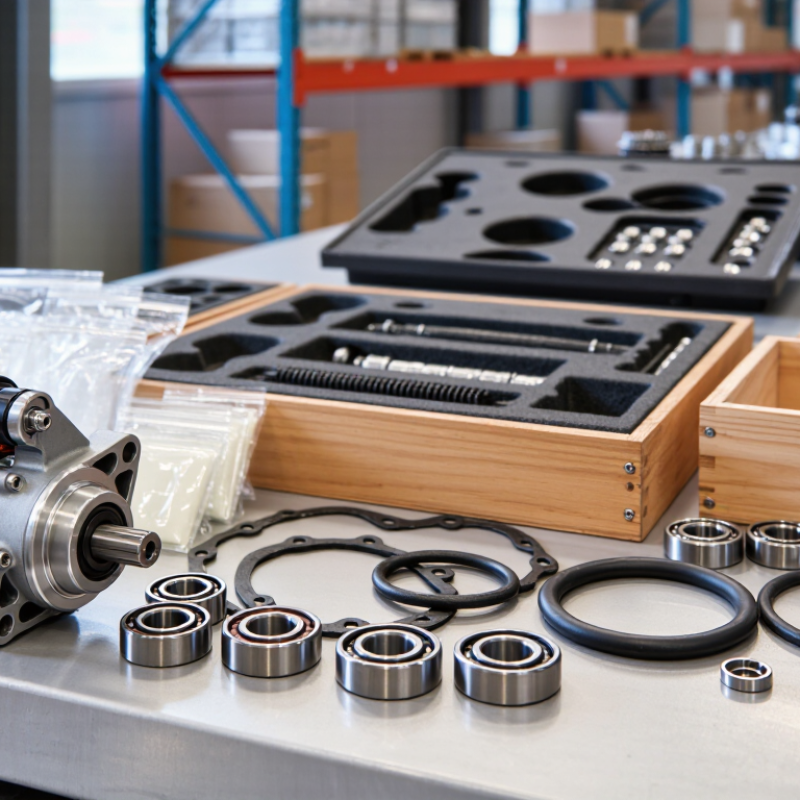
A capable Generator Spare Parts supplier should provide clear part numbers, cross-reference data, packing photos, and traceable quality documents. Sample testing remains valuable. It can reveal poor sealing, rough machining, or incorrect electrical resistance before shipment. Ask difficult questions.
Export experience also matters. Strong suppliers understand moisture protection, wooden-case requirements, labeling, and replacement procedures. They communicate quickly when a specification changes. That saves time during urgent repairs.
Still, no supplier is perfect. Even experienced buyers can overlook a small gasket or connector. I have seen purchasing teams focus heavily on unit price, then lose money through downtime and repeated freight costs. A better decision balances quality, availability, warranty response, and total operating cost. This guide examines how global buyers can evaluate Chinese manufacturers with greater confidence. It focuses on evidence, not attractive promises.
Generator spare parts are replacement components that restore a generator’s performance after wear, damage, or scheduled service.
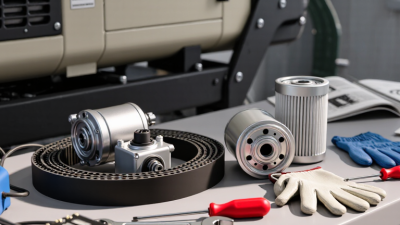
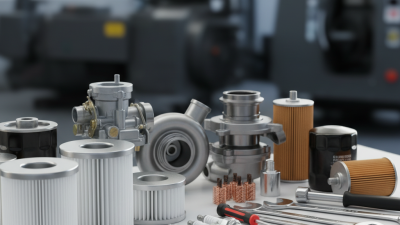
They include filters, belts, gaskets, sensors, injectors, bearings, control modules, and cooling-system parts.
Each item has a specific role. A worn belt can stop a unit. A blocked filter can increase fuel consumption. Small parts matter.
Global buyers need these components because generators often operate far from repair centers. A mining site, hospital, or construction camp cannot wait weeks for one seal or relay.
From my experience supporting maintenance teams, accurate part identification prevents expensive mistakes. Buyers should check the generator model, serial range, voltage, dimensions, material, and service history before ordering. Photos help, but measurements provide stronger evidence. Compatibility must be verified, not guessed.
A dependable supplier provides traceable specifications, inspection records, protective packaging, and clear communication across time zones. Parts should be protected from moisture, impact, and contamination during international transport. Local regulations may require documents for electrical or mechanical components.
Stock planning reduces downtime, yet it is never perfect. I have seen teams store many filters but miss one inexpensive gasket. That oversight delayed a complete repair.
Reviewing failure patterns and keeping critical spares available creates a more practical purchasing plan. Some recommendations still need field testing. Real operating conditions can expose weaknesses that a catalog cannot show.
China Best Generator Spare Parts Supplier for Global Buyers
When a generator fails, a cheap component can become an expensive outage. Reliable sourcing starts with evidence, not a polished website. The World Bank’s Logistics Performance Index 2023 ranked China 19th among 139 economies, with a score of 3.7. That indicates strong logistics potential. It does not verify every supplier. Ask for a registered address, production photos, export records, and a live video inspection. Vague answers deserve caution.
Technical fit must be measurable. Send the engine model, part number, dimensions, material requirements, voltage, and operating environment. Request drawings, material records, inspection reports, and a sample before bulk purchasing. For electrical components, require applicable IEC test references. For quality systems, check an auditable ISO 9001 certificate and its certification scope. The ISO Survey 2023 recorded more than 1.26 million ISO 9001 certificates worldwide. A certificate alone proves little. Scope matters.
Field experience exposes details that catalogs miss. I check terminal plating, gasket hardness, thread accuracy, packaging moisture, and label consistency. I also compare replacement parts against failed originals, not only sales drawings. The IEA’s Electricity 2024 report projects global electricity demand growth of about 4% annually through 2026. More operating hours increase pressure on spare-parts reliability. My checks remain imperfect. One overlooked tolerance can fail after heat, vibration, and dust. A supplier documenting corrective action is more credible than one promising zero defects. Agree on warranty response times, batch traceability, independent testing, and remedies for nonconforming parts.
| Evaluation Dimension | What a Reliable Supplier Should Provide | Practical Benchmark | Documents or Evidence to Check | Common Warning Sign | Priority |
|---|---|---|---|---|---|
| Product Compatibility | Clear compatibility information for the generator model, engine model, alternator model, part number, dimensions, material, and application. | Every quotation should identify the exact part number or provide a controlled cross-reference with technical limitations clearly stated. | Technical drawing, dimensional sheet, product specification, application list, and sample confirmation. | The supplier accepts an order using only a product photo or a general description such as “universal generator part.” | Essential |
| Quality Management | A documented quality-management process covering incoming materials, production or sourcing, inspection, nonconformity handling, and final release. | A valid ISO 9001 certificate should match the legal entity, business scope, and certificate validity period. | Current certificate, certification body details, quality manual summary, inspection records, and corrective-action reports. | A certificate is expired, belongs to another entity, or cannot be verified through the issuing certification body. | Essential |
| Material Traceability | Key components and raw materials can be traced from purchase records to production batches and final shipment. | Each production batch should have a lot number, inspection record, and identifiable supplier or material reference. | Material certificates, batch records, incoming inspection reports, and product labels. | The supplier cannot identify the material source or explain how mixed batches are controlled. | Recommended |
| Electrical and Mechanical Testing | Testing is appropriate to the part type, including dimensions, insulation, resistance, pressure, leakage, balance, or operating performance where applicable. | Inspection criteria should be defined before production, with measurable acceptance limits and recorded results. | Inspection plan, calibrated equipment list, test reports, calibration certificates, and final inspection records. | The supplier provides only a visual inspection statement for parts that require electrical or mechanical testing. | Essential |
| Standards and Safety Compliance | Products are designed and tested according to the standards relevant to their function, destination market, and installation environment. | The supplier should identify the applicable standard or customer specification instead of making broad, unsupported compliance claims. | Declaration of conformity where applicable, test reports, safety data, technical file, and customer-specific specifications. | The supplier claims that all products are “international standard” without naming the applicable requirement. | Essential |
| Sample Approval | A pre-production or pre-shipment sample can be inspected and approved against an agreed specification. | The approved sample should be identified by part number, revision, date, and approval status before mass production. | Sample approval form, signed specification, photographs, measurement report, and retained reference sample. | The supplier discourages sampling or changes materials and dimensions after approval without written notice. | Essential |
| Production and Supply Capacity | Stable access to manufacturing, machining, electrical testing, packaging, and replacement-part inventory. | Capacity should be demonstrated using recent production records, lead-time data, and a documented plan for peak demand. | Factory audit, production schedule, equipment list, inventory report, and capacity statement. | Lead times are given without checking material availability or production loading. | Recommended |
| Lead-Time Reliability | Order confirmation includes production time, inspection time, packaging time, shipping terms, and a realistic dispatch date. | The supplier should track promised versus actual dispatch dates and communicate delays before the agreed deadline. | Purchase-order history, delivery-performance report, production milestones, and written escalation procedure. | The supplier repeatedly changes the shipping date or gives an unusually short lead time without stock evidence. | Essential |
| Packaging and Preservation | Packaging protects parts from moisture, vibration, corrosion, impact, and electrostatic or mechanical damage where relevant. | Packaging instructions should specify protective materials, identification labels, quantity, and storage conditions. | Packaging specification, packing-list template, photographs of packed goods, and storage recommendations. | Heavy or precision parts are packed without shock protection, moisture control, or clear identification. | Recommended |
| Export Documentation | Commercial documents are consistent and complete for customs clearance and receiving inspection. | The commercial invoice, packing list, transport document, country-of-origin information, and product description should be consistent. | Sample invoice, packing list, export declaration information, tariff classification support, and shipping document process. | Part descriptions, quantities, weights, or values differ between commercial documents. | Essential |
| After-Sales Support | Technical support is available for installation questions, compatibility confirmation, failure analysis, and replacement claims. | Technical inquiries should receive a documented response within one business day, with a defined process for urgent cases. | Support contact details, response procedure, warranty terms, troubleshooting guide, and claim records. | The supplier has no technical contact and treats every quality issue as a buyer installation problem. | Essential |
| Warranty and Nonconformity Handling | Warranty coverage, exclusions, evidence requirements, response times, replacement policy, and responsibility for verified defects are written clearly. | A formal corrective-action process should identify root cause, containment action, corrective action, and effectiveness verification. | Warranty policy, claim form, corrective-action report template, replacement records, and service terms. | Warranty terms are verbal, undefined, or limited to “replacement if available.” | Essential |
| Commercial Transparency | Quotations clearly separate product price, tooling, testing, packaging, freight, taxes, payment terms, and validity period. | The quotation should state currency, trade term, minimum order quantity, delivery point, and all known additional charges. | Detailed quotation, proforma invoice, payment instructions, trade-term confirmation, and change-control record. | The initial price is attractive but important costs appear only after the purchase order is issued. | Essential |
| Factory and Supplier Verification | The legal entity, operating address, production capability, and actual supply chain can be independently verified. | Business registration, bank-account ownership, factory address, and contracting entity should be consistent. | Business-license information, video or on-site audit, contract details, bank-account verification, and reference orders. | The payment account belongs to an unrelated entity or the supplier refuses basic operational verification. | Essential |
| Long-Term Supply Continuity | The supplier can support repeat orders, engineering changes, obsolete-part management, and alternative sourcing when necessary. | A documented change-notification process should be used for changes to materials, dimensions, processes, or subcontractors. | Engineering-change notice, product-life-cycle policy, approved-vendor list, and continuity plan. | The supplier changes a component or subcontractor without notification, revision control, or re-approval. | Recommended |
China Best Generator Spare Parts Supplier for Global Buyers
Key Product Categories in a Complete Generator Parts Supply Range
A complete generator parts range begins with real service needs, not a crowded catalog. Experienced buyers often need engine components, fuel system parts, filters, gaskets, and bearings. These parts support regular maintenance and urgent repairs. Clear specifications help match dimensions, materials, and operating conditions. Small differences matter.
Cooling system products include radiators, water pumps, thermostats, hoses, and fan assemblies. Electrical categories cover starter motors, charging units, sensors, relays, and wiring components. Control system parts may include monitoring modules, switches, display panels, and protective devices. Each item should be checked against voltage, current, temperature, and installation details.
Exhaust components also deserve careful attention. Flexible connectors, silencers, clamps, and sealing materials must withstand heat and vibration. A professional supplier should provide measurements, product photos, inspection records, and practical installation guidance. We have found that packaging quality matters too. A damaged connector can delay a complete project. No catalog is perfect. Some older generator models require extra measurement and technical review before ordering. That step may feel slow, but it prevents costly mismatches. Experienced teams should also inspect random samples, verify materials, and keep replacement data organized for future purchases.
The chart presents common industrial diesel generator replacement categories and typical planning intervals based on operating hours. Oil, fuel, air and coolant filtration components are commonly scheduled according to usage conditions, while belts and coolant generally require longer replacement cycles. Actual intervals vary by engine design, load profile, environment and the equipment manufacturer’s maintenance manual.
Choosing the best generator spare parts supplier in China requires more than comparing catalog prices. Quality should be checked through material certificates, dimensional records, and batch traceability. For engine components, ask for hardness results, sealing tests, and measured tolerances. ISO 8528 defines performance requirements for generating sets, while ISO 9001 supports process consistency, not automatic product quality. That distinction matters.
Compatibility is more than matching a model number. Confirm engine series, duty cycle, voltage, connector layout, and installation dimensions. A filter that fits the housing may still have the wrong flow resistance. The International Energy Agency reported that data centres used about 460 TWh of electricity in 2022, with demand potentially exceeding 1,000 TWh by 2026. Backup equipment will face more operating pressure. Small mismatches can become expensive failures.
Pricing should include freight, testing, warranty terms, and emergency replacement time. Request at least three comparable quotations with identical specifications. The cheapest offer is not always efficient. I have seen buyers overlook packaging quality, then receive damaged seals after a long sea shipment. Certifications should be relevant and verifiable, including test reports aligned with ISO or IEC requirements. Ask for serial records, inspection photos, and a sample part before ordering in volume. Some checks feel slow. They are cheaper than a shutdown.
International buyers need more than a low unit price. A reliable Chinese supplier should confirm the engine model, part number, voltage, dimensions, and operating hours before quoting. Ask for drawings, material details, and clear product photos. This prevents costly mismatches at the repair site. The International Energy Agency reports continued growth in global electricity demand, increasing pressure on dependable backup and distributed power systems. Spare parts must support uptime, not simply fill a carton.
Ordering should include a pro forma invoice, packing list, warranty terms, and agreed Incoterms. UNCTAD reports that over 80% of global merchandise trade by volume moves by sea. Therefore, export packaging needs moisture protection, shock resistance, and visible part labels. Confirm the HS code and destination documents with a qualified customs professional. Small errors delay real projects. They happen.
After-sales support should provide a named contact, response targets, installation guidance, and replacement procedures. Keep serial numbers, inspection photos, and test records for every shipment. The World Bank’s 2023 Logistics Performance Index collected feedback from 4,090 supply-chain professionals across 139 economies, showing major differences in logistics reliability. Buyers should allow realistic transit buffers instead of promising impossible delivery dates. A good supplier also reviews failed parts honestly, even when the cause is uncertain. That habit builds trust.